Scholarships for high school seniors: where to look and when to apply
High school seniors should file the FAFSA as early in the fall as possible, get their counselor’s local scholarship list in September, and apply steadily from October through March, when most deadlines cluster. Look locally first, then search niche awards that match specific facts about you, and use the big databases last. Aim for about 25 well-aimed applications.
When should high school seniors apply for scholarships?
Seniors should apply all year, with the heaviest stretch from October through March, when most deadlines cluster. Deadlines never fully stop, though, so the season doesn’t end in spring.
Think of senior year as harvest. If you did some prep as a junior, you are collecting on it now; if you didn’t, you build as you go. Here is the rhythm the book lays out:
| When | What to do |
|---|---|
| Early fall | File the FAFSA as early as you can. Everything else stacks on it. |
| September | Ask your counselor for the local scholarship list, then check back monthly, because new awards drop all year. |
| Weeks before your first deadline | Ask two adults who know you well for recommendation letters. |
| October through March | Work your tracker in weekly shifts: a couple of evenings and a few applications every week. |
| April and later | Keep going. Students still applying in April are often applying nearly alone. |
That last row matters more than it looks. The competition thins as the year goes on, so endurance is a strategy all by itself.
Where should high school seniors look for scholarships first?
Seniors should start with the FAFSA, then local awards, then niche awards, and only then the big national databases. That order runs roughly from the most money and best odds to the most competition.
- The FAFSA. It unlocks federal grants, state programs and much of colleges’ own aid, and some state aid is first-come, first-served. The book calls it your first scholarship.
- Your school counselor and your town. Ask, “Can I see the list of local scholarships?” Then search your city or county name plus “community foundation.” Local pools are small, which is why they are winnable.
- Niche awards that fit you. Career associations, heritage and background, first-generation status, hobbies. More on this below.
- The big databases. Fastweb, Scholarships.com, Bold.org, BigFuture, CareerOneStop and JLV College Counseling are free and legitimate. Set up profiles on two or three and let matches come to you.
Two habits make the databases safer. Create a separate email address just for scholarship hunting, since some sites have been caught passing student data to marketers. And before you spend an hour on any listing, spend two minutes confirming this year’s deadline and rules on the sponsor’s own website.
The databases come last for a reason: everyone is using them. A national award listed everywhere might pull tens of thousands of applications, so your odds on any single one are lottery-thin.
Why is searching “scholarships for high school seniors” the wrong move?
Searching the generic phrase puts you in the biggest, most crowded pool there is. Every senior in the country qualifies for a scholarship “for high school seniors,” so you are competing with all of them.
Scholarship providers aren’t looking for the best student in America. They are looking for the best match for their specific purpose, and the more specific the purpose, the fewer people apply.
So swap the question “What’s out there?” for “What’s out there for someone exactly like me?” Sit down with a parent or friend and write a list of at least 20 true things about you:
- Every field you are considering studying
- Every group you belong to, and what your parents do for work
- Where your family comes from and what you have overcome
- Hobbies and interests most people don’t share
Each entry becomes its own search on the databases and its own question for your counselor. Career field is the strongest place to start: search the field you want plus “association scholarship.”
The generic student competes with everyone. The specific student competes with almost no one.
How many scholarships should a high school senior apply to?
Aim for about 25 well-aimed applications rather than a handful. In the book’s words, one application is a lottery ticket and twenty-five applications is a strategy.
Nobody wins most of what they apply to, including the valedictorian. According to the College Board and EducationData.org figures the book draws on, about one in eight students wins a private scholarship, and the winners are simply the ones who apply to enough that “sometimes” adds up.
Volume only works if each application gets cheaper. That is what a document pack is for:
- One folder with your transcript, test scores if you have them, a one-page activity list and a short brag sheet of stories about yourself
- Two recommendation letters from adults who actually know you
- About five core essays answering the questions most prompts boil down to, re-tailored honestly for each sponsor
- A tracker with four columns: scholarship name, deadline, what it needs, status
Application one takes hours. With the pack built, application fifteen can take 45 minutes.
When rejections come, treat each one as a shift that didn’t pay, not a verdict on you. The essay you wrote is inventory for the next prompt it fits.
What should seniors do after winning a scholarship?
After a win, report it to your college, write the donor a real thank-you note, and learn the conditions for keeping the money. Then keep the machine running.
- Report every award. Hiding an outside scholarship from your college is aid fraud. Some colleges reduce their own aid when you win outside money, so ask each school, “What is your outside scholarship policy?” before you commit.
- Write the thank-you note. Say what the award means and what you are doing with it. Donors are often local people, and these relationships can turn into internships, mentors and recommendation letters later.
- Know your renewal conditions. Some awards renew each year if you meet conditions, usually a GPA floor and full-time enrollment. Losing a renewal can cost thousands.
- Re-file the FAFSA every year. It is not one-and-done; the form expires annually.
Don’t shut the hunt down at graduation, either. A large share of scholarship money is reserved for students already in college, and most of your competition has quit. An hour a week each September and January keeps you in pools nobody else showed up to.
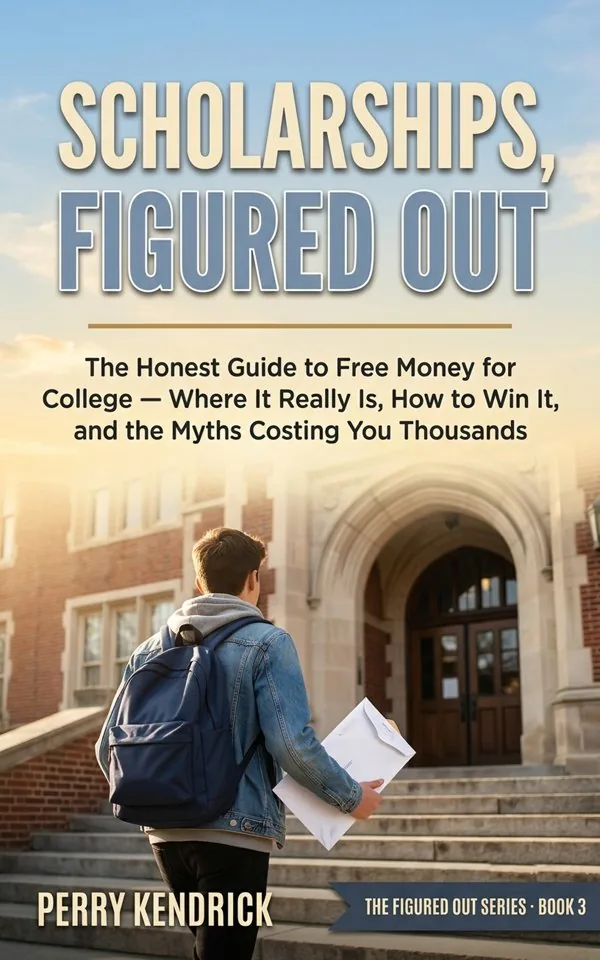
The whole system, in one book
Chapter 11, “Volume Is the Strategy,” lays out the full year-by-year schedule from freshman year through senior harvest, and Chapter 8 walks you through building the document pack, including exactly how to ask for recommendation letters. Chapters 4 through 6 cover the big databases, the local hunt and the niche search in depth, and Chapter 13, “The Long Game,” shows how to keep winning once you are in college.
Want every award, not just 100? The full 2027-28 directory covers 1,500+ verified programs checked against the sponsors' own sites in September 2026 ($40).
Frequently asked questions
Is it too late to apply for scholarships in the spring of senior year?
No. Scholarship deadlines cluster from October through March, but they never fully stop. Students still applying in April are often applying nearly alone, because the competition thins as the year goes on. Keep checking your counselor’s local list monthly, since new awards appear throughout the year, and keep working your tracker.
What documents do I need to apply for scholarships as a senior?
Most applications ask for some mix of the same things: your transcript, test scores if you have them, an activity list, one or two recommendation letters, an essay, and sometimes your FAFSA confirmation summary. Gather them in one folder before you apply anywhere, so every application after the first becomes far quicker.
When should seniors ask for scholarship recommendation letters?
Ask weeks before your first deadline, never days. Ask in person if you can, choose adults who know you well rather than the most impressive title, and ask whether they can write a strong recommendation. Give them your activity list, what the scholarship values, and the deadline in writing, then thank them afterward.
Are scholarship search websites safe for high school seniors?
The major databases are free and legitimate, but some have been caught sharing student data with marketers. Use a separate email address just for scholarship hunting, and confirm every listing on the sponsor’s own website, since databases carry expired awards. Be wary of scholarship advice on TikTok, where about one in three students encounters misleading content.
Can juniors apply for scholarships too?
Yes. A surprising number of awards accept juniors, so apply to everything you are eligible for. Junior year is also the time to build your document pack, ask for letters in spring, and draft your first two core essays over the summer. Every hour of junior-year prep buys back three senior-year hours.
More scholarship help
Sources
- College Board (2025). Trends in Student Aid 2025. research.collegeboard.org
- EducationData.org. Scholarship Statistics. educationdata.org/scholarship-statistics
- The Hechinger Report. Reporting on scholarship websites and student data. hechingerreport.org
General guidance from Scholarships, Figured Out, not individualized financial, legal or tax advice. Rules and deadlines change; confirm them with the program or your school's financial aid office.
Sources
Official and primary sources on the topic. Rules, deadlines and figures change, so confirm current details there before you act.
- Counselors and Mentors Handbook on Federal Student Aid (U.S. Department of Education, Federal Student Aid). Guide for advisors on the 2027-28 FAFSA, the free Department of Labor scholarship search, reporting outside awards, and never paying to file.
- How to Find and Apply for Scholarships (College Board BigFuture). Explains how to find and apply for scholarships, including asking counselors and checking local businesses, banks and churches.
- The FAFSA Process (U.S. Department of Education, Financial Aid Toolkit). Explains how to complete and submit the FAFSA and what follows, noting many states and schools set deadlines earlier than the federal one.